This is Hartlepool Guide

Home
Forum
Hartlepool News
Accommodation
Entertainment
Things to See & Do
What's On
Restaurants
Shopping
Tourist Information
History of Hartlepool
History of Ships
Hartlepool Gallery
Building Power Station
Hartlepool Homes
Hartlepool Jobs
Local
Democracy
Education
Hartlepool United
About Us / Advertise
Hartlepool Tall Ships


History of Hartlepool

We have put together a number of different articles detailing every aspect of Hartlepool history, from the original Old Hartlepool to the ship building firms of Sir William Gray.

Hartlepool has a long proud history. Hartlepool was originally two towns, the ancient town of Old Hartlepool, known locally as the Headland, and the more recent West Hartlepool. They amalgamated in 1967 to form what is now the single entity known as Hartlepool.

Surrounded on three sides by the sea, the Magnesium Limestone headland or peninsula called the Heugh at Hartlepool is more familiarly known as Old Hartlepool.

Old Hartlepool is the original fishing village which existed before West Hartlepool. It is usually used to distinguish that part of the town from the 'new' town of West Hartlepool. West Hartlepool then became known as Hartlepool and Old Hartlepool, wishing to keep its separate identity, began to be known as the Headland!

Hartlepool may not always readily accept association with Teesside, it has its own natural harbour to the north of the river, but in recent centuries its industrial history has been very closely tied up with the River Tees.

In prehistoric times Hartlepool's headland is thought to have been an isolated tidal island covered by thick forests. In the nineteenth century during excavation of the adjacent marshy area called the Slake, trunks of trees from the ancient forest were found embedded in the clay along with antlers and the teeth from deer that seem to have inhabited the area in large numbers many years ago.

Hartlepool forest is still recorded in existence in the thirteenth century. In fact the ancient Anglo Saxon name for Hartlepool was Heret eu meaning Stag Island which is a reference to either the stag's head shape of the headland or perhaps an indication that the area may have been well inhabited by forest deer.

Hartlepool History


Featured

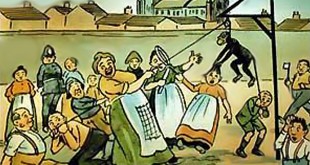
The Hartlepool Monkey, Who hung the monkey?

The monkey-hanging legend is the most famous story connected with Hartlepool. During the Napoleonic Wars a ship was wrecked off the Hartlepool coast.


Featured

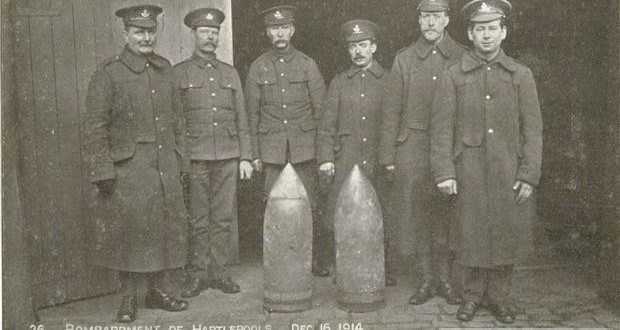
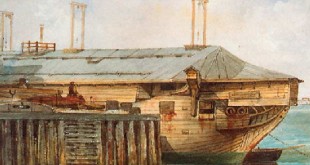
Bombardment of Hartlepool

Hartlepool became the first place on mainland Britain to be bombed by the Germans.


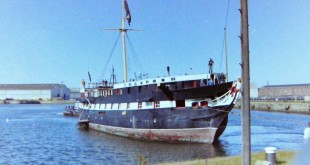
Restoring the HMS Trincomalee

Trincomalee, still called the TS Foudroyant, was transported to Hartlepool by a special chartered barge. The Foudroyant Trust, with the aid of cash from Hampshire County Council, had commissioned a study regarding the best option for the ship's future. Hartlepool was selected on the strength of the impressive restoration of HMS Warrior 1860, the Royal Navy's first ironclad currently on display in Portsmouth.


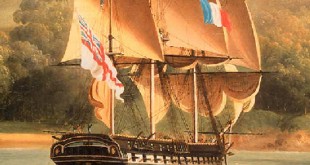
History of the HMS Trincomalee

In May 1816 work finally began on HMS Trincomalee at the Wadia Shipyards at Bombay, near the teak forests of Malabar.


History of the HMS Trincomalee (Page 2)

Due to the end of the Napoleonic Wars, Great Britain's naval strength was reduced. After fitting out, which cost a further £2400, Trincomalee was placed 'in ordinary' - that is she was roofed over, had her masts removed, and was placed in Portsmouth harbour under general maintenance until such time as she may be recalled into active service.


History of the Heugh Battery

Heugh Battery and its sister sites were first conceived in the wake of the Napoleonic Wars to protect the important port and ship building centre of Hartlepool from attack by sea.


Victoria Park History

The land in which Victoria Park resides was originally used as a limestone quarry, which was owned by the North-Eastern Railway Company.


Andy Capp

The subject of a newspaper cartoon strip since 1957, when he first appeared in the northern edition of the Daily Mirror, Andy Capp became the star of a British stage musical in 1982


Sir William Gray Page 1

It has been said that although Ralph Ward Jackson founded the town of West Hartlepool, it was William Gray who made it.


Bruce's Port

In the thirteenth century the coastal port and fishing town of Hartlepool became a fortified place with defensive walls constructed around the Headland.


Medieval Port

Throughout the Middle Ages Hartlepool virtually monopolised the shipping of the Durham Bishopric and was one of the busiest places on the eastern coast. Such was its importance that it regularly attracted pirates


Old Hartlepool

Old Hartlepool is the original fishing village which existed before West Hartlepool. The origins of ancient town of Hartlepool (Old Hartlepool) can be traced back to ca 647 AD.


West Hartlepool History

At the beginning of the nineteenth century it was hard to believe that Old Hartlepool, with its small population of only 993 consisting almost entirely of fishermen had been one of the busiest ports on the eastern coast.


Hartlepool Place Names

Hartlepool was once a small town surrounded by a collection of villages and farms - some of which still exist today.


Sir William Gray Page 2

13 years on William Gray became the first Mayor of West Hartlepool - the only person ever to have been Mayor of both towns. Two years later In 1890 Queen Victoria knighted him for his services


Where the name Hartlepool came from

There are many suggestions as to how the name Hartlepool came about


Complete Hartlepool History

Hartlepool was originally two towns, the ancient town of Hartlepool, known locally as the Headland, and the more recent West Hartlepool.


PSS Wingfield Castle

The Wingfield Castle was one of three sisters, the Tattershall Castle, the Wingfield Castle and the later Lincoln Castle


Zuiderdijk

Zuiderdijk (Id. No. 2724)a freighter built in 1912 by William Gray & Co. Ltd. at Hartlepool, England was operated by the Holland-America Line until 1918


Tattershall Castle

In 1934 William Gray & Company of West Hartlepool, built the Tattershall Castle for the London and North Eastern Railway Company (LNER)


Norlina

Norlina (No. 1597), a freighter built as Harfleur in 1909 by William Gray & Co., Ltd, West Hartlepool, England, was renamed Georgiana in 1915


Submerged Forest

Hartlepool Submerged Forest is a site of Special Scientific Interest (SSSI), which lies on the foreshore at Hartlepool, on the north-east coast of England. This stretches to the north and south of Newburn Bridge for approximately 400 metres.


Tilly Bailey Irvine Solicitors History

The firm's story began in the Victorian era. At the turn of the 20th century a legal partnership, Turnbull & Tilly, practised in Hartlepool. They were Notaries Public dealing with shipmasters' claims and were based in the same office at 13, Church Street in which Edward Turnbull had originally started his practice in 1841.


History of Lamb's Jeweller

THE mechanics of the clock, the name on the doorway and the reputation of the family run business, all remain the same as they did when Henry Lamb opened his jewellery shop 135 years ago. However, along with a change of location, there is one other notable alteration.